

Cart
0
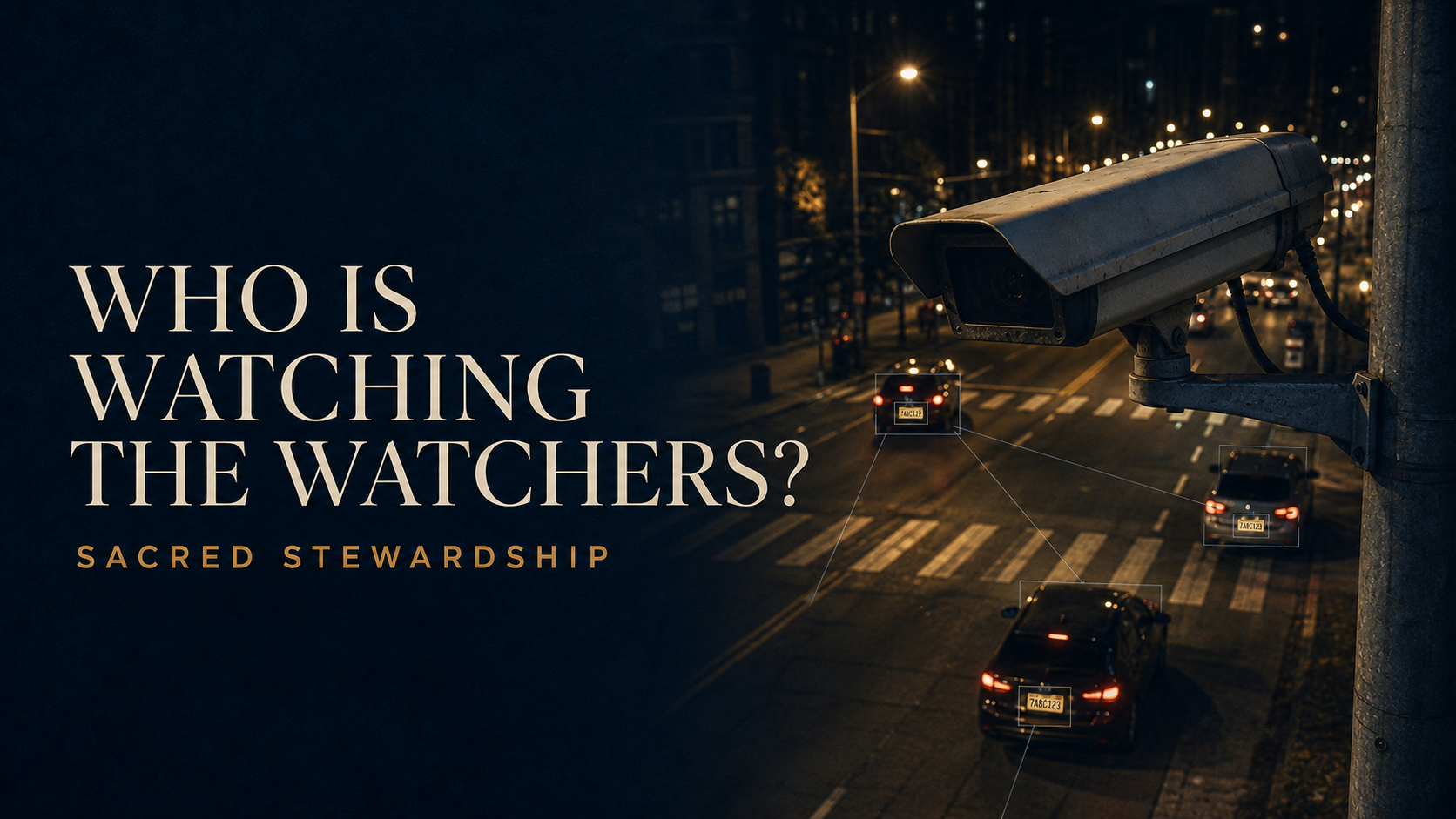
Flock Camera Abuses Reveal the Cost of Building a Surveillance System Before Establishing Accountability
Technology is often introduced with a promise: greater safety, faster investigations, more convenience, less crime.
But what happens when the systems created to protect the public are used to monitor, track, stalk, or intimidate the very people they were supposedly designed to serve?
Recent reports from Georgia describe multiple law-enforcement officers and government employees accused of accessing Flock Safety’s automated license-plate reader network for purposes unrelated to legitimate police work. Some have reportedly been suspended, fired, forced to resign, or criminally charged.
This is not simply a matter of a few employees violating department policy.
It is a warning about what becomes possible when extraordinarily powerful surveillance technology is deployed across our communities without equally powerful safeguards protecting the public.
The Visible Problem: Surveillance Tools Are Being Abused
Flock cameras capture license plates and other vehicle information as people travel through neighborhoods, business districts, parking lots, and public roads. That information can be searched to help law enforcement locate vehicles associated with crimes.
But location information can also reveal far more than where a vehicle happened to be.
It can expose where someone lives, works, worships, receives medical care, attends meetings, visits family, seeks counseling, participates in political activity, or spends private time.
When someone with access to these systems searches for a former spouse, romantic partner, neighbor, acquaintance, political opponent, or private citizen, that is not merely an improper database query. It can become a detailed map of another person’s life.
The expanding number of reported abuses should force communities across the country to ask a basic question:
If these are only the violations that have been discovered, how many searches have never been audited, reported, or exposed?
The Deeper Problem: We Built the System Before Establishing the Boundaries
The deeper issue is not whether every officer or agency using this technology has bad intentions. Most do not.
The issue is that we continue introducing surveillance capabilities first and debating constitutional boundaries, public consent, data ownership, retention, access, and accountability later.
By then, the cameras are installed, the contracts are signed, the databases are populated, and the technology has become embedded in daily life.
Now Flock’s ambitions reportedly extend beyond stationary cameras. Proposals have included placing license-plate-scanning technology inside rideshare and delivery vehicles, potentially transforming hundreds of thousands of privately operated cars into mobile data-collection devices. Drone-based applications have also been discussed or pursued in some communities.
That would create something far more expansive than a tool positioned at a known intersection.
It could create a moving, decentralized surveillance network capable of collecting information almost everywhere people travel—potentially without drivers or the public fully understanding what is being gathered, where it is stored, who can access it, and how long it remains available.
This is how a surveillance state grows: not necessarily through one dramatic announcement, but through thousands of seemingly reasonable decisions made without the public ever seeing the complete picture.
Public Safety Cannot Become a Blank Check
There is a legitimate role for technology in investigating serious crimes, locating dangerous suspects, recovering stolen vehicles, and protecting communities.
But invoking “public safety” cannot end the conversation.
Every powerful tool must have clear limits. Access should be narrow, searches should require documented lawful purposes, records should be independently audited, retention periods should be strictly limited, and meaningful consequences should follow every abuse.
We must also ask whether indiscriminately collecting information about millions of innocent people is compatible with the constitutional principle that government intrusion should be based on individualized suspicion and lawful authority.
Americans should not have to prove they were harmed after their movements have already been tracked.
The burden should remain on those collecting the data to demonstrate why the surveillance is necessary, proportionate, constitutionally grounded, and subject to meaningful oversight.
Privacy Is Not About Having Something to Hide
We often hear that people who have “nothing to hide” should not be concerned about surveillance.
That argument fundamentally misunderstands privacy.
Privacy protects the space in which human beings think, worship, associate, communicate, heal, dissent, and live without being continuously observed. It is inseparable from dignity, freedom of conscience, due process, and the presumption of innocence.
A free society does not treat every citizen as a potential suspect simply because technology makes mass tracking possible.
Our movements generate data. That data tells a story about our lives. It has value, and it can be used to influence, manipulate, investigate, expose, or control us.
That is why personal data must be treated as an extension of the person - not as an unlimited corporate or government asset available for collection simply because we entered a public space.
A Sacred Stewardship Perspective
Sacred Stewardship asks a foundational question about every technology:
Does it serve humanity, or does it diminish human freedom and dignity?
God-given authority is never permission for unchecked power. Those entrusted with authority carry a greater responsibility to exercise it with justice, restraint, humility, and accountability.
Scripture repeatedly warns against rulers and institutions that use power to oppress rather than protect. It also commands us to defend the vulnerable, expose wrongdoing, and pursue justice.
“Whoever walks in integrity walks securely, but whoever takes crooked paths will be found out.” ~ Proverbs 10:9
Technology is not morally neutral once it is placed into human systems. Its design, deployment, incentives, access controls, and permitted uses reflect moral choices.
When surveillance systems are built around the assumption that those holding power will always use it properly, we have failed to account for human nature.
Good stewardship requires more than trusting people to do the right thing. It requires building systems that limit the opportunity to do the wrong thing.
We Need an Electronic Bill of Rights
Our constitutional protections must extend fully into the digital age.
An Electronic Bill of Rights should affirm that personal data - including location data generated by our vehicles, phones, devices, and digital activity - belongs to the individual.
Government access should require lawful authority and meaningful due process. Private companies should not be permitted to build vast surveillance infrastructures that can later be accessed, shared, sold, or repurposed without informed consent and transparent limitations.
At minimum, communities considering automated license-plate readers and similar technologies should demand:
- Public disclosure before contracts are approved
- Clear limits on when searches may be conducted
- Search logs that cannot be altered or deleted
- Regular independent audits
- Strict data-retention limits
- Warrants where constitutionally required
- Prohibitions against sharing data outside authorized investigations
- Immediate notification and meaningful remedies when abuse occurs
- Criminal and civil consequences for intentional misuse
- Public reporting showing how often the systems are used and whether they produce legitimate results
City councils, county commissions, sheriffs’ departments, police departments, state legislators, and taxpayers must stop treating these contracts as ordinary technology purchases.
They are decisions about civil liberty.
The Path Forward
We do not have to choose between safety and freedom.
We must insist upon both.
Law-enforcement agencies can use narrowly tailored investigative tools while respecting constitutional rights. Technology companies can innovate without creating permanent records of innocent Americans’ movements. Communities can support officers while demanding transparency and accountability from the institutions entrusted with these systems.
But none of that will happen if citizens remain unaware or silent.
Ask whether Flock cameras are operating in your community. Find out who approved them, what the contract permits, how long the information is retained, which agencies can search it, whether data is shared across jurisdictions, and how access is audited.
The time to establish boundaries is not after someone is stalked, targeted, falsely accused, or harmed.
It is before the system becomes too large to control.
Technology must remain accountable to the people - not the people to the technology.
Sacred Stewardship Prayer
Before you move on with your day, please join me in prayer.
Heavenly Father,
Give us wisdom to recognize when tools created for protection begin threatening the freedom and dignity of the people they were meant to serve.
Expose every abuse of authority and bring accountability wherever power has been misused. Protect innocent people from unlawful surveillance, stalking, intimidation, and exploitation.
Grant courage and discernment to our law-enforcement leaders, legislators, local officials, technology developers, and citizens. Help them pursue genuine public safety without abandoning privacy, due process, and constitutional liberty.
Remind us that every position of authority is a sacred trust. May those entrusted with power exercise it with integrity, humility, restraint, and justice.
Help us build technology that serves humanity, honors human dignity, protects freedom, and reflects truth.
In Jesus’ name, Amen.
About Sacred Stewardship
Sacred Stewardship is a registered 501(c)(3) nonprofit restoring moral clarity in the digital age. We work to protect children, strengthen families, and restore human flourishing by calling parents, churches, institutions, policymakers, and corporate leaders back to truth, responsibility, and the sacred duty of stewardship.

