

Cart
0
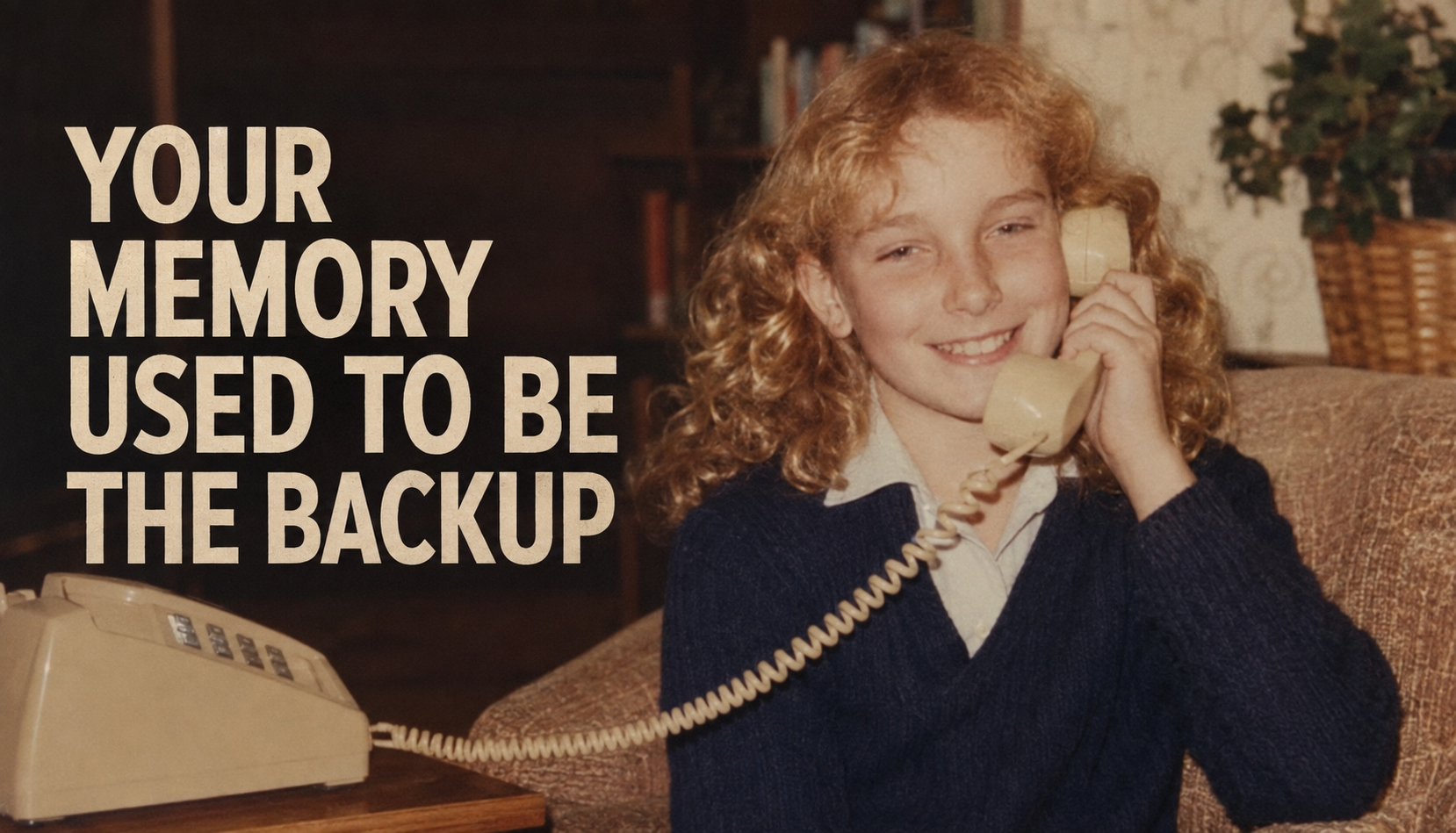
I had a startling realization about eight days ago, so found it fascinating that Sean Patrick Tario mentioned the very same thing in his MARK37.COM newsletter today. More about the overall article in a separate post.
The realization that actually brought tears to my eyes last Sunday?
Outside of my children, my ex-husband, and my Aunt Kelly, and one childhood friend, I literally do not know anyone's phone number by heart.
Not my best friend or my closest friends or neighbors. Not my brother or my in-laws. Not my son’s girlfriend or my daughter's boyfriend.
Yet I can still remember my best friend’s phone number from 1980...more than four decades later.
That should tell us something.
We have outsourced so much of our memory, awareness, and basic independence to our devices that we rarely stop to consider what happens when the phone is lost, the battery dies, the network goes down, the account is locked, or the technology simply fails.
Our memory used to be the backup.
Now, many of us are one lost phone or dead battery away from being unable to reach the people we love, find our way home, or access the information we need.
This isn’t paranoia. It’s preparedness - and personal responsibility.
Learn the phone numbers of the people you may urgently need to reach. Write them on a card and keep it in your wallet.
Put a paper map in your car. Make sure your children know essential phone numbers and addresses and what to do when a screen is unavailable.
Technology should support human capability, not replace it.
Sean’s article is about a client transitioning away from Apple after being a loyal customer for 30 years. But this particular point goes far beyond one company or one device.
It is about reclaiming the skills, memory, and independence we surrendered so gradually that most of us never even noticed.
So here’s today’s question:
If your phone stopped working right now, how many of the people you love could you actually reach?

